
Shared Ground: How the World Cup reminds us why public space - and community - still matters.
Every four years, the World Cup transforms the world into something that feels increasingly rare: a shared public ritual. Neighborhoods gather in parks and bars, and for a few weeks the borders that organize our politics soften into something else—a global public assembled around a game.
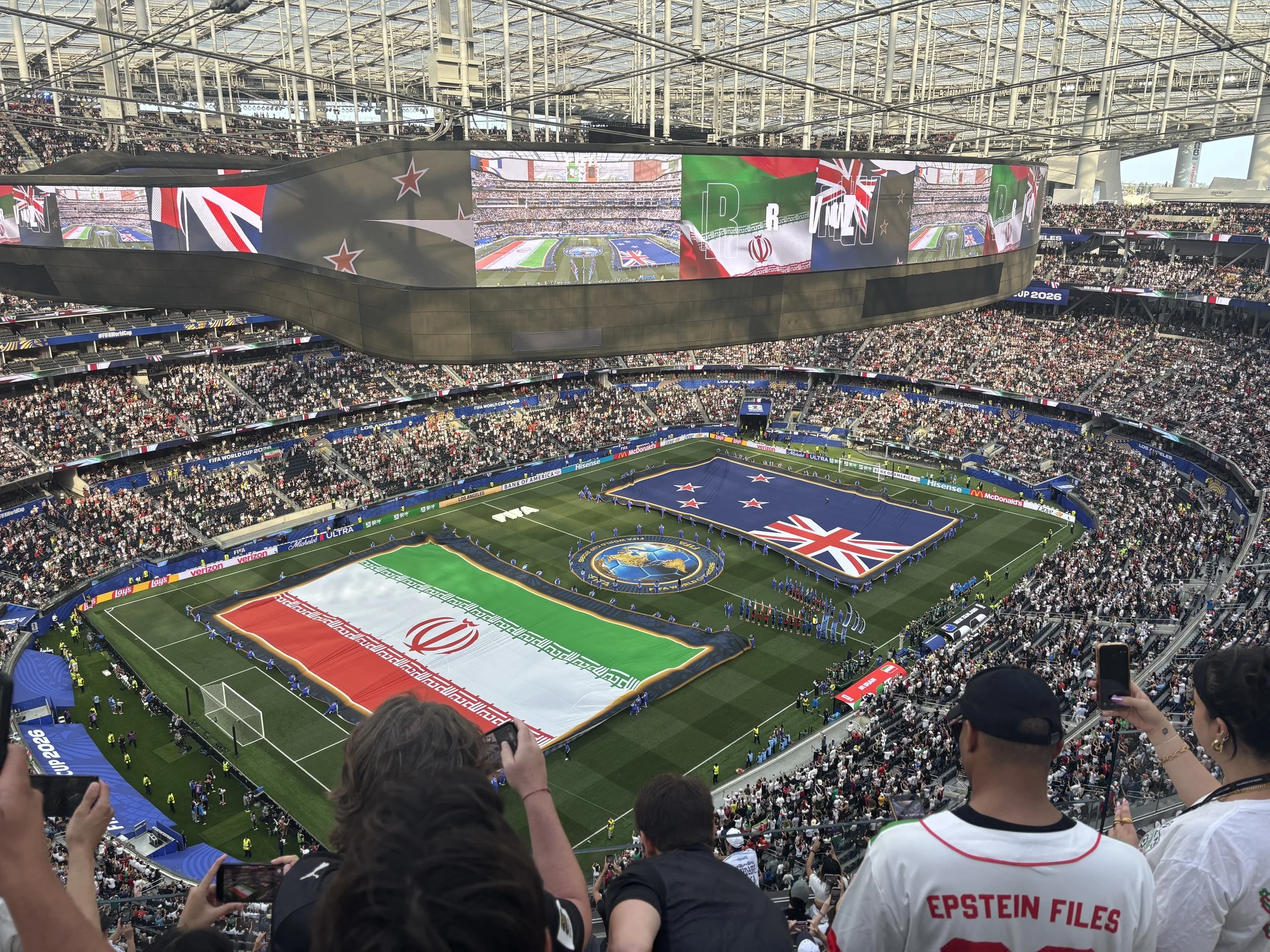
That promise, of course, is never without contradiction. During this year’s tournament, debates over flags, national identity, and political protest unfolded both inside and outside stadium gates. A flag became more than a flag. It raised larger questions: How do we support people without endorsing governments? How do we register dissent at the scale of a stadium, where identity is compressed into symbols meant to unite millions at once?
These questions extend far beyond any one nation. What does fairness mean when geopolitics inevitably shape the tournament? Who are we cheering for when national teams also embody histories of migration, diaspora, and colonialism? What does international identity look like today—beyond passports, beyond flags, beyond the nation-state itself?
The World Cup has always contained these tensions. FIFA’s history of corruption exists alongside immigration crackdowns, militarized borders, and staggering global inequality. Yet the tournament remains one of the few events capable of creating a shared rhythm across cities, neighborhoods, and households around the world.
That rhythm is felt most clearly at the community scale: in the café that drags a television onto the sidewalk, the park where strangers gather around a screen, the family restaurant filled beyond capacity, or the neighborhood bar where people who may share little else celebrate and grieve together.
Perhaps that is the World Cup’s greatest significance. It is not simply a sporting event, but a reminder that public life is built through shared experience.
For MAAM, this is where the conversation becomes less about soccer and more about community. What kinds of spaces allow strangers to experience belonging, disagreement, and celebration together? How do parks, plazas, restaurants, stadiums, sidewalks, and streets become places where people feel invited to participate—not as a single, unified public, but as many overlapping communities sharing the same city?
As Los Angeles prepares to host the Olympic Games, those questions feel especially timely. The challenge is not simply to accommodate millions of visitors, but to create an experience that also belongs to the people who already live here. How can the city’s neighborhoods, small businesses, public spaces, and local communities become part of the event rather than simply its backdrop? How can a global gathering strengthen local connection?
The World Cup offers no easy answers. But it reminds us that the places where we gather matter. Stadiums, parks, neighborhood bars, cafés, and city streets are more than venues; they are the civic infrastructure of community life. In a world that often pulls us apart, creating places where people can come together, recognize one another, and feel part of a shared experience may be one of the most important things design can do.