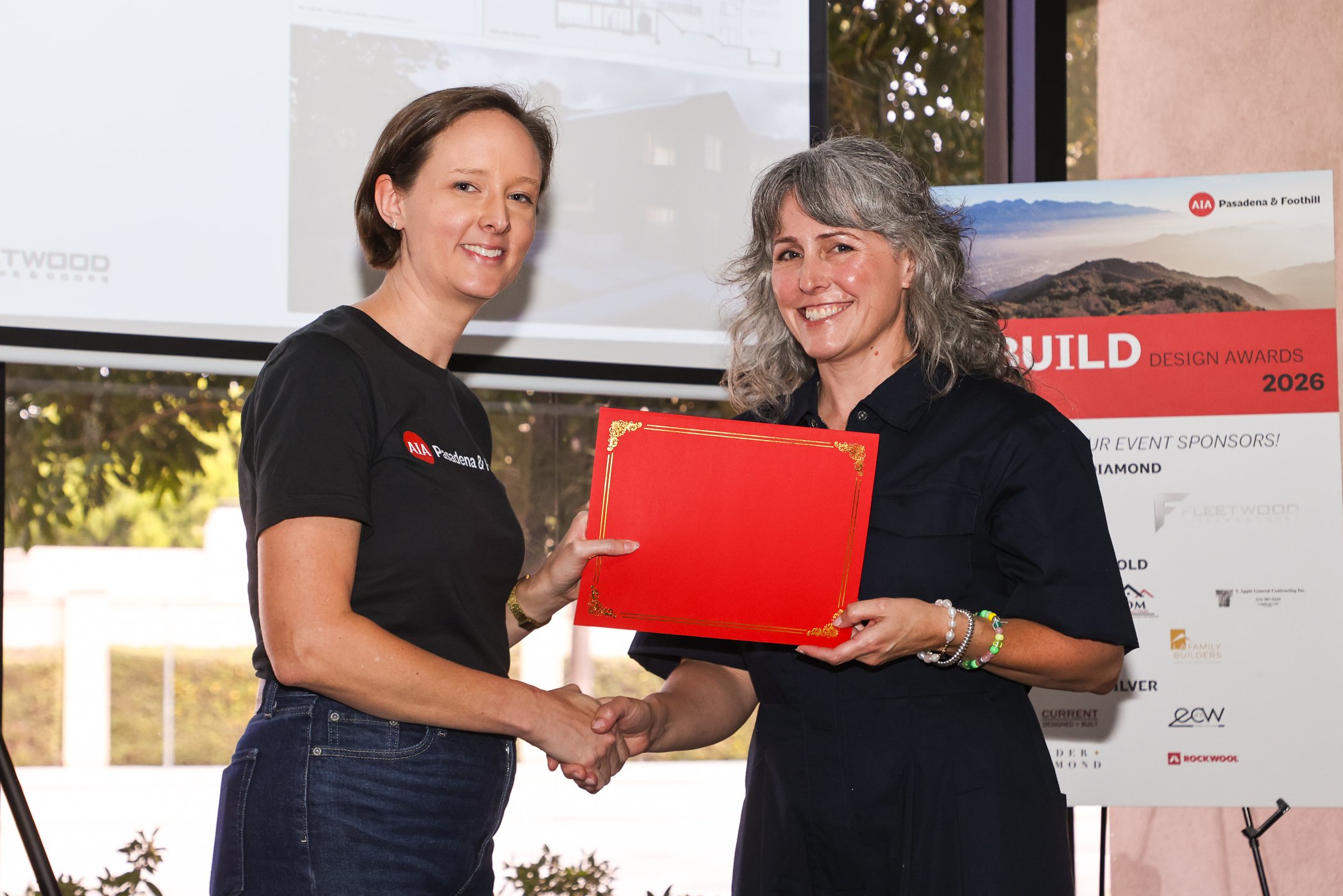
Marathon House: Winner of 2 AIA Awards
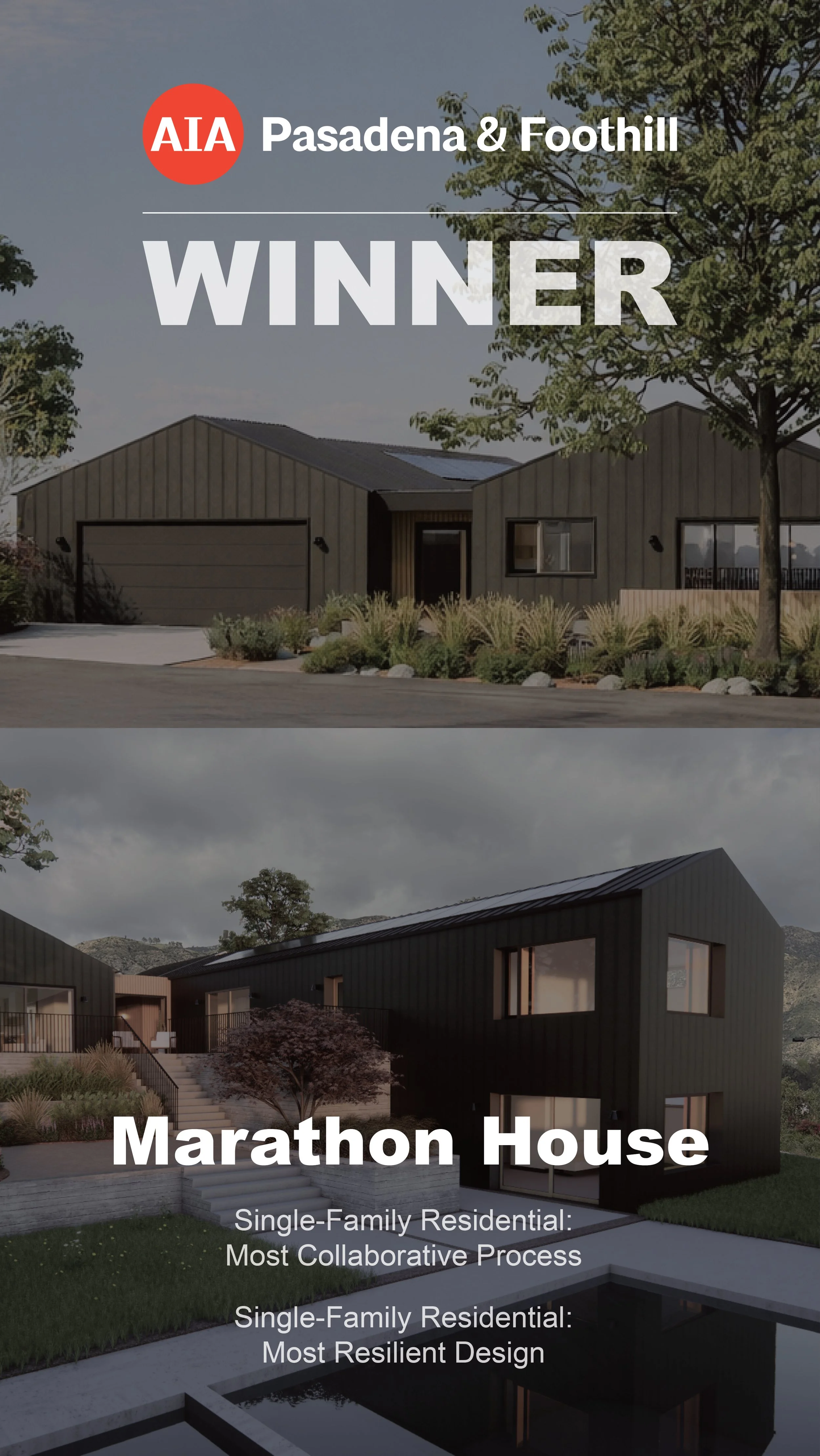
We’re proud to announce that our Marathon House project has received two AIA awards - a recognition that speaks not only to the design itself, but to the ideas, people, and purpose behind it.
This project began with an urgent and deeply personal challenge. After losing their home to fire for the third time, the clients set out to rebuild with a fundamentally different mindset: resilience could no longer be an afterthought; it had to be embedded from the start. The answer became Marathon House.
While Passive House is often associated with energy efficiency and comfort, its underlying building science makes it uniquely suited for fire-prone environments. A super-insulated, airtight envelope reduces the pathways through which smoke and embers typically enter. Traditional vulnerabilities, like vented attics and crawl spaces, are eliminated. A balanced heat recovery ventilation system continuously delivers filtered air, maintaining indoor air quality during active wildfire events and in the long recovery periods that follow.
But what makes Marathon House award-winning isn’t just performance - it’s how that performance is realized. Every decision, from non-combustible exterior materials to triple-glazed, fire-resistant windows, contributes to a holistic strategy that prioritizes safety, durability, and long-term livability. The home is designed not just to withstand a single event, but to remain stable, healthy, and habitable in the face of ongoing environmental stress.
Equally important is how the project came together. Delivering this level of rigor within the constraints of an insurance-based rebuild required a highly collaborative process from day one. The clients, both deeply engaged in design, initiated the vision. From there, MAAM worked closely with the contractor, energy consultant, structural engineer, and landscape architect to align performance goals with cost and constructability. Rather than a traditional, linear approach, the project evolved through constant dialogue and shared problem-solving.
Each voice shaped the outcome. The contractor brought valuable experience from post-wildfire construction. The energy consultant ensured Passive House standards were met without compromise. The structural engineer developed thoughtful solutions around thermal bridging and efficiency. Together, the team transformed a complex set of constraints into a cohesive, forward-thinking home.
Marathon House ultimately stands as more than a rebuild. It’s a shift in how we think about architecture in fire-prone regions, where resilience, sustainability, and design excellence are not separate ambitions, but one and the same.
We’re honored by this recognition and grateful to the entire team and clients who made it possible.